Ever since I witnessed Holland win their first ever international title in 1988, being a fan of the Oranje has been nothing but heartbreaks and bitter disappointments. With the Oranje not being part of the 24 teams playing this summer in France for the European Championship, let’s revisit their previous disappointments in this tournament since 1988.
The Lead-Up:
Two years after losing to Portugal in the Round of 16 of the 2006 World Cup, the Oranje were back in the UEFA European Championship. This was their second consecutive elimination by Portugal in four years after losing to them in the Semi-Finals of Euro 2004. It was a truly awful game that saw more fouls than beautiful football. Marco van Basten was the manager of the 2006 team and this was his chance to redeem himself following a forgettable showing by the Orange at the World Cup.
Holland qualified after finishing second in their group. For this tournament, UEFA decided to change the qualifying format by having seven groups, with the top two teams automatically qualifying for Euro 2008. Holland battled Romania and Bulgaria for a top two finish that saw them come in second place. Their other opponents in the group featured Belarus, Albania, Slovenia and Luxembourg. Holland had been grouped with Belarus and Luxembourg in 1996 and once again, the Oranje would up losing a game in Belarus. They also failed to beat Romania in both matches, a draw and a loss, but did draw in Bulgaria before defeating them 2-0 in Amsterdam. Thus, Romania finished in first place with 29 points, while the Oranje finished second with 26, just one point ahead of Bulgaria. Holland had assured qualification with a game in hand, thanks to their victory over Bulgaria, so their loss against Belarus in the final qualifying match did not impact them.
This also meant that the Oranje were going to be playing in their sixth consecutive UEFA European Championship. That summer also marked the twenty year anniversary of the 88 Euro Oranje team winning their first and only European Championship. Could fate repeat itself with the star of that 1988 tournament now managing the side?
Austria and Switzerland were co-hosts for the 2008 edition. Holland were grouped in Group C with the defending World Cup champions, Italy, the other World Cup finalists, France, and the team that topped their qualifying group, Romania.
Group A consisted of Portugal, the side who eliminated Holland in Euro 2004 and World Cup 2006, Turkey, Czech Republic and Switzerland. Group B consisted of Germany, Croatia, Austria and Poland. Group D consisted of Spain, Russia, coached by former Oranje manager Guus Hiddink, Sweden and defending European champions, Greece.
Euro 2008 saw the return of the familiar faces from the past such as Edwin van der Sar and Giovanni van Bronckhorst along with the new faces from Euro 2004 such as Ruud van Nistelrooy, Wesley Sneijder, Arjen Robben, Rafael van der Vaart, John Heitinga, and Wilfred Bouma. There had been a falling out between Marco and Ruud during World Cup 2006, but they were able to patch things up in time for Euro 2008. However, the same could not be said regarding Marco and Mark van Bommel who stated he would not play for the Oranje as long as Marco was in charge, thereby ensuring he was not going to be a member of this team. The rest of the team consisted of those who made their Oranje debut in an international tournament at the World Cup two years ago or this European championship.
This was the first European championship for the likes of André Ooijer, Joris Mathijsen, Demy de Zeeuw, Robin van Persie, Orlando Engelaar, Mario Melchiot, GK Henk Timmer, Tim de Cler, Maarten Stekelenburg, Nigel de Jong, Dirk Kuyt, Klaas-Jan Huntelaar, Ibrahim Afellay, Khalid Boulahrouz, and Jan Vennegoor of Hesslink. Boulahrouz’s call up came at the last second after Ryan Babel suffered an injury during training which caused him to miss the tournament. That injury would turn out to be a blessing in disguise thanks to Boulahrouz’s performance.
Holland kicked off their Group with a resounding 3-0 victory over the World Cup champions Italy. Holland got their revenge for their Euro 2000 exit at the hands of the Italians by displaying superb counter attacking football that saw van Nistelrooy and Sneijder give the Orange a 2-0 after 30 minutes with van Bronckhorst scoring the third in the 79th minute. Their next match was against France, and the Oranje crushed them 4-1. Kuyt gave the Oranje the lead after nine minutes for the only goal of the first half. Oranje then doubled their lead at the hour mark through Van Persie but France managed to pull one back through Thierry Henry in the 71st minute.

However, the Oranje responded a minute later after Robben scored an extraordinary goal to make it 3-1 before Sneijder scored the fourth in stoppage time. After two matches, Holland had qualified to the knockout stages and ensured they would remain victorious after defeating, and eliminating, Romania 2-0 through goals from Huntelaar in the 54th minute and van Persie in the 87th minute. Marco van Basten opted to rest most of his starters so this allowed for Stekelenburg to make his first ever start for the Oranje at a tournament while Huntelaar scored his first ever goal in a tournament. Italy went on to defeat France to finish second.
Holland were just unstoppable as they scored 9 goals through 7 different players in the group stage. The team was on a roll and showed they were dangerous with or without the ball. There had been concerns about their defending leading up to this tournament but the last minute addition of Boulahrouz proved to be rewarding as the team seemed solid at the back. Marco van Basten had just managed his team to impressive victories over both World Cup 2006 finalists and many felt that they were the favorites to reach the Final.
Holland’s opponents in the Quarter-Finals would be Russia. Defending champions Greece exited in the group stage so a new champion was going to be crowned. Germany would meet Portugal, Croatia would meet Turkey, and Spain would face Italy. Could the Oranje celebrate the 20 year anniversary of their Euro 88 triumph with another title?
The Heartbreak:
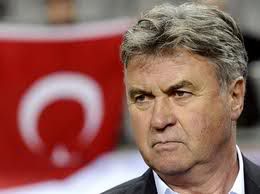
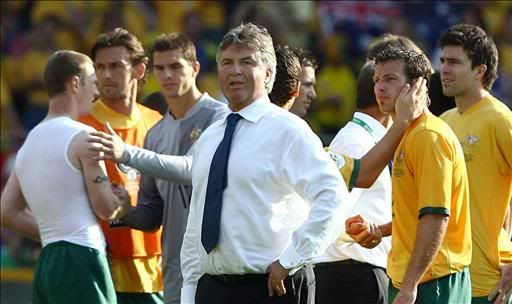
It was strange watching Guus Hiddink sit in the dugout of Russia and not Holland. Just ten years ago, he was coaching the Oranje at the World Cup and now, he was coaching the Russians, the team Holland defeated to capture Euro 88. Marco van Basten, who just two years ago was thought to be inexperienced, had his team playing well with confidence and, for once, there was team harmony.
Sadly, just when things were going well, tragedy struck. During Euro 2008, Boulahrouz’s wife, Sabia had been attending Euro 2008 along with the other players’ spouses and girlfriends. Sabia was pregnant at the time, and a few days before the match against Russia, she had to be taken to the hospital because of pregnancy complications.
Sadly, she gave birth to a premature born baby daughter who passed away. This tragic news not only affected Boulahrouz and his wife, but the entire team as well. The KNVB stated, “Players and staff of the Dutch team are upset by the death of Anissa, the daughter of Khalid Boulahrouz and his wife Sabia, who was born prematurely.”
Sadly, she gave birth to a premature born baby daughter who passed away. This tragic news not only affected Boulahrouz and his wife, but the entire team as well. The KNVB stated, “Players and staff of the Dutch team are upset by the death of Anissa, the daughter of Khalid Boulahrouz and his wife Sabia, who was born prematurely.”
Mentally, the team was affected and this affected their training for the clash against Russia and van Basten gave his players some space to deal with this awful event. The team would also be affected on the pitch when Robben was ruled out of the Quarter-Finals against Russia because of a groin injury. Marco van Basten left it to Boulahrouz to decide if he wanted to play against Russia and the defender chose to play. When the teams lined up for the match, the Oranje players, with Boulahrouz in the starting lineup, donned black armbands in solidarity with their teammate.
Edwin van der Sar was in goal with van Bronckhorst and Boulahrouz as the starting fullbacks while Ooijer and Mathijsen played in the center of the defense. Up front was van Nistelrooy with Sniejder, van der Vaart and Kuyt supporting him while Engelaar and de Jong watched over their backs. Most of the starters had not played against Romania so they were rested for this match.
The Russians though started the match strong and threatened early against the well-rested, but distraught Oranje. In the 7th minute, van der Sar was forced into making a diving save to stop Yuri Zhirkov’s free kick effort. Two minutes later, Roman Pavlyuchenko headed Igor Semshov’s cross over the bar. Hiddink’s plan to have his team be aggressive and limit space for the Oranje was working.
Holland’s first real chance came in the 20th minute, after Sneijder managed to break into the box, only for his shot to be blocked by a Russian player. Ten minutes later, van der Vaart whipped in a cross that neither Van Nistelrooy nor De Jong could not put away, although replays showed their shirts were being tugged. Suddenly, Russia’s number 10, Andrei Arshavin, came alive in this game and curled a low shot towards the far post which forced van der Sar to fully extend himself to make a save. The veteran goalkeeper didn’t have much time to relax because on the ensuing corner, Denis Kolodin had an effort on goal which forced him into a coming up with a good stop for another corner kick. On the ensuing corner kick, the ball was cleared from the box and Kolodin struck a shot from near midfield that van der Sar managed to tip over the cross bar.
Holland would then reply with a few chances of their own. In the 37th minute, Boulahrouz sent van Nistelrooy through on goal but his effort was stopped by Igor Akinfeyev. A few minutes later, Sneijder sent a free kick over the bar. A minute before the interval, van der Vaart had a chance to give his side the lead, but his effort was right at Akinfeyev. The halftime whistle blew and this match was still up for grabs.
Kuyt’s night was over as van Basten opted to replace him with van Persie at the restart, who proceeded to waste a chance in the opening minutes. Russia were the better side after the restart while the Oranje could not generate anything. The Oranje would be forced into making a second substitution in the 54th minute when Boulahrouz picked up an injury and had to be replaced by Heitinga. In what was one of toughest weeks of his life, Boulahrouz seemed to have reached his breaking point mentally and physically with that injury. This substitution would also impact the Oranje as their backline had just been weakened.
Just when things couldn’t get any worse, Russia would strike first blood two minutes later when Sergei Semak’s cross from the left was volleyed in by Pavlyuchenko to give his side the lead. This was the first time that Holland were behind in Euro 2008. The Oranje were in shock after that goal and struggled to recover, and van Basten made his final substitution by taking off Engelaar for Afellay in the 62nd minute. In the 71st minute, Pavlyuchenko’s superb one touch chip over van Bronckhorst fell to Aleksandr Anyukov inside the box. Fortunately, van der Sar managed to fully extend his arm to get a hand on the ball and deny Anyukoy’s effort at the far post. The ball stopped upon impact and bounced down in front van der Sar.
The Oranje’s confidence was gone and they were struggling against the Russians. Even dead ball situations were being wasted. In the 72nd minute, Holland had a free kick at the edge of the box and both Sneijder and van Persie stood over the ball before van Persie blasted it over the wall, over the goal, and into the stands. Pavlyuchenko was denied by van der Sar in the 78th minute and a few minutes later, Sneijder had a shot from some distance that went over the bar.
It looked bleak. It looked hopeless. It looked like the Oranje were going to crash out. Yet, the Oranje somehow managed to equalize in the 86th minute. Holland were awarded a free kick from some distance. Sneijder swung in the free kick and somehow the ball fell perfectly to van Nistelrooy to head in the equalizer from close range. 1-1 and the Oranje just gave themselves a second chance.
Right before the final whistle, it seemed that the Oranje were going to face a shorthanded Russian side when the referee Ľuboš Micheľ showed Kolodin what appeared to be his second yellow for a foul Sneijder. However, Micheľ ran to the linesman who convinced him to change his mind, thereby allowing Kolodin to stay on the pitch. Some would say it was the wrong decision but both teams would have eleven players heading into Extra Time.
That equalizer should have been demoralizing for Russia and provided Holland with an extra boost momentum needed to claim victory. No one though told the Russians because it seemed to spur them on, especially Arshavin, and they were the better and dominant side for the remainder of the match. Seven minutes into Extra Time, Russia came close to scoring when Pavlyuchenko struck the crossbar, and three minutes later Arshavin caused havoc before finding substitute Dmtri Torbinski, whose shot was stopped by van der Sar.
The first half of Extra Time came to an end and the Oranje were listless but still not out of this game. Nonetheless, fatigue was setting in and it showed in the second half of Extra Time. In the 17th minute, Zhirkov went down inside the box, claiming he was fouled by Heitinga. Referee waved play on but it was obvious that there were some tired legs out there. Then the inevitable happened; Russia scored. In the 112th minute, Arshavin managed to get to the by-line and was given enough space by Ooijer to somehow loop the ball across the goal. Unfortunately, van der Sar misjudged the ball and allowed it to get behind him. That allowed Torbinski to sprint past van der Vaart and nudge the ball in for the go ahead goal.

You could tell that there was no coming back from that goal for the Oranje. Arshavin was playing like a player with an extra lung, which was not that astonishing since this was only his second match of Euro 2008 after serving a two-match suspension at the start of the tournament. It was no surprise that he scored the third and final goal of the match four minutes later. Arshavin managed to beat the off side trap and got the ball at the edge of the box, then fooled Ooijer before seeing his shot on goal take a slight deflection off of Heitinga, whose attempt at blocking the shot resulted in the ball going between van der Saar’s legs. 3-1 and any chance of another late equalizer had vanished.

In a matter of 120 minutes, Holland’s great run in this tournament came to a grinding halt. The Russians celebrated their surprising win while Holland would once again exit a tournament filled with regret and disappointment. Overall, this was a wonderful tournament for the Oranje until they played the Russians. The positives from this tournament was that we saw that the young talent from Euro 2004 and World Cup 2006 can deliver for the Oranje and are capable of greater things. No doubt this tournament served as a building block for the World Cup in two years’ time.

The Aftermath:
Spain eliminated Italy, then Russia before facing Germany, who eliminated Portugal and Turkey, and defeated them too, to celebrate their second ever European championship. Marco van Basten stepped down as manager of the Oranje after this tournament. His successor would be Bert van Marwijk, Mark van Bommel’s father in law.
Two years later, most of these players, would finally reach the 2010 World Cup Final in South Africa. There, they would suffer a painful loss to Spain in Extra Time. It seems that the Oranje traded exits through penalty shootouts with exits after Extra Time.
Two years later, most of these players, would finally reach the 2010 World Cup Final in South Africa. There, they would suffer a painful loss to Spain in Extra Time. It seems that the Oranje traded exits through penalty shootouts with exits after Extra Time.
Sadly, this tournament marked the end of an era as Edwin van der Sar retired from the national team after Euro 2008. He had been the Oranje’s starting goalkeeper since Euro 96 that saw him start in four European Championships and two World Cups. Ruud van Nistelrooy also played in his final major tournament for the Oranje. Under van Marwijk, Ruud would not feature for the Oranje until after the World Cup where he appeared in a few Euro 2012 Qualifiers. He was also ignored for that tournament. Nonetheless, this core of players marked a new era for the Oranje that would be remembered down the road for the highs and the lows.