Ever since I witnessed Holland win their first ever international title in 1988, being a fan of the Oranje has been nothing but heartbreaks and bitter disappointments. With the Oranje not being part of the 24 teams playing this summer in France for the European Championship, let’s revisit their previous disappointments in this tournament since 1988 and conclude this trip down memory lane with questions about the current state of the Oranje and their future.
The Lead-Up:
Two years after losing to Spain in the 2010 World Cup Final, the Oranje were back in the UEFA European Championship. Bert van Marwijk had coached the Oranje to the Final and his next mission was to win this Euro 2016. His first step was qualifying for this tournament.
Holland qualified for Euro 2012 after they battled Sweden to win their group. Their other opponents in the group were Finland, Hungary, Moldavia and San Marino. The Oranje won their first nine qualifiers before dropping their tenth and final one to Sweden. By then, they had already won the group and punched their ticket to play in their seventh consecutive UEFA European Championship. The Oranje scored 37 goals and conceded 8 in their 10 qualifiers, with Klaas-Jan Huntelaar scoring 12 goals.
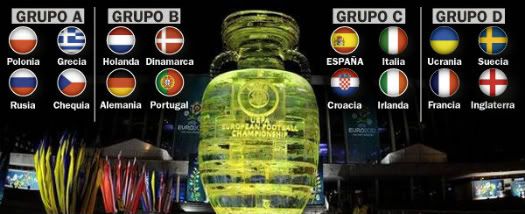
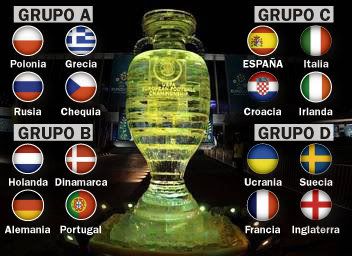
Poland and Ukraine were the co-hosts for the 2012 edition. Holland were grouped in Group B with their arch rivals, Germany, their recent foe Portugal, and Denmark. Group A consisted of Czech Republic, Greece, Russia, the team that eliminated the Oranje in 2008, and Poland. Group C consisted of defending World and European Champions, Spain, Italy, Croatia and Ireland. Group D consisted of England, France, Ukraine and Sweden. Without a doubt, the Oranje got the group of death. The Oranje’s Nike kit for this tournament saw them use the orange color for the home kit, and the black color for the away kit.
Euro 2012 team consisted of all the Oranje stars who played a big part in reaching the World Cup Final with the lone exception of Giovanni van Bronckhorst. The veteran defender, and captain of the World Cup finalists, retired from football altogether after that painful loss. The new captain was Mark van Bommel, van Marwijk’s son-in-law and the usual stars of Wesley Sneijder, Arjen Robben, Dirk Kuyt, Rafael van der Vaart, Robin van Persie, Maarten Stekelenburg, Ibrahim Afellay and Huntelaar were to be relied on for this tournament. This was the European tournament debut for the likes of Gregory van der Wiel, Ron Vlaar, Jetro Willems, while Luciano Narsingh, Luuk de Jong, Kevin Strootman, Stijn Schaars, Michel Vorm, and Tim Krul were called up but did not get to play.
The Heartbreak:
Holland kicked off their Group with a shock 1-0 loss to Denmark after Michael Krohn-Dehli scored in the 24th minute. The Oranje performed well, but their poor finishing cost them. This loss was a sucker-punch to the Oranje and their fans. The team already had a bad taste in their mouth before playing a single minute in this tournament when their black players received racist jeers during a training session from some Polish fans in attendance. It didn’t help matters that UEFA initially denied such incidents had occurred. This defeat just made things sourer.
Nevertheless, this loss should have served as a wake-up call ahead of their clash Germany. Instead, the Oranje found themselves down 2-0 after Germany’s Mario Gomez scored in the 24th and 38th minute. Van Persie scored one for the Oranje in the 73rd minute but the team fell short of grabbing an equalizer, not for the lack of trying, and suffered their second consecutive loss in this tournament.
Just two years removed from an amazing run to a World Cup Final, the Oranje were no longer basking in the sun; they were flying too close to it like Icarus. The disappointing performance against Germany coupled with some of players bickering among each other, was not well received by the fans. The accolades in the past were now in the past and the team had their hands full trying to win over their fans again, which they could start by trying to win a game.
Even though they lost their first two matches, the Oranje still had a shot at finishing second, behind Germany, if they defeated Portugal in their final group match, and if Germany also defeated Denmark. For this crucial match, van Marwijk gambled and made changes to the lineup. For the first time in this tournament, Huntelaar started a game after finding himself on the bench against Denmark and Germany. He had watched van Persie start in his place but now they were on the pitch together with van Persie placed behind him.
Holland started off well and scored in the 11th minute through van der Vaart, who was also making his first start of the tournament and his 99th cap for the Oranje. He would then strike the post soon afterwards. Although Holland started off on the right foot, they played the remainder of the match as if they were dancing with two left feet. Their defending left much to be desired and an equalizer from Portugal was inevitable, which then came to fruition in the 28th minute through Cristiano Ronaldo. Ronaldo would score the game winner in the 78th minute and for the first time since winning Euro 88, Holland were eliminated in the group stage of a major tournament. Dressed in their black kit, the attire was most appropriate for this moment.

Overall, this tournament was a nightmare. There were no positives from this tournament that saw this talented group of players fail to build on the momentum of their World Cup run in 2010. This tournament also served as a red flag that things were heading in the wrong direction.
The Aftermath:
Spain repeated as European Champions by getting past France, Portugal and Italy to celebrate their third ever European championship. The fallout from this disappointment saw both the manager and the players receive justified criticism. Bert van Marwijk stepped down as manager of the Oranje after this tournament. He was contracted to remain with the Oranje until 2016 but this showing by the Oranje caused him to resign.
Following that Portugal defeat, it did not take long for reports to emerge that the team was divided thanks to egos. Perhaps the 2010 World Cup caused some egos to swell big enough to drive a wedge between teammates. There was talk that there was a lack of respect between players and manager and between the players themselves. Supposedly, there were two camps involved in this mess consisting of a van Persie camp and a Sneijder camp where one camp allegedly wanted to play football a certain style of football while the other camp wanted to play a different style of football. An example of how toxic the Oranje camp had become was when a story came out that alleged a member of the Oranje coaching staff told Huntelaar to zip it or face getting thrown out of the team’s hotel.
It didn’t help matters when a sad and disappointed Gregory van Der Weil spoke to the media following Holland’s elimination. He mentioned how his teammates shunned him on the pitch and did not allow him to play to his strengths. He also claimed that his relationship with his teammates was disastrous. If the performances of the Oranje on the pitch were disastrous, then the off the pitch issues turned this into a dumpster fire. This brought back memories of the lack of team unity in Euro 96, and what was one positive step forward in World Cup 2010 followed with two steps backwards after Euro 2012.

Of course van Marwijk shouldered some of the blame for this debacle. He fouled things up with his tactics and lineups. I personally never considered van Persie an important player for the Oranje, especially in 2012. He never really got to shine for the Oranje at the big stage. I was also a firm believer that Huntelaar should have started ahead of van Persie in Euro 2012. Huntelaar started the majority of the qualifiers and did a superb job on scoring a huge tally of goals for the Oranje. It seemed like the team had a perfect system but van Marwijk decided to bench Huntelaar for van Persie for this tournament.
More importantly, van Marwijk dropped the ball in a major way when he obviously lost control and respect of some of his players. That happens to some of the best of coaches. However, he could have taken control and made all the players see the errors of their ways. For example, Spain’s manager, Vicente Del Bosque had no problem making the Spanish Barça and Real Madrid players patch things up for the good of the team and their country in this tournament which they won.
Surprisingly, the KNVB hired Louis van Gaal again as the next Oranje manager. Two years later, he helped the team reach the World Cup and make it all the way to the Semi-Finals before suffering another penalty shootout loss to Argentina. Unfortunately, van Gaal copied van Marwijk’s strategy of playing not to lose by the time they reached the knock out stage and Holland went home with a 3rd place medal. The tenure of van Gaal was limited to just the World Cup, so a new successor was needed. That successor also turned out to be someone from the Oranje past; Guus Hiddink.
With the likes of Frank de Boer and Ronald Koeman as possible coaching options, the KNVB opted to hire Guus Hiddink as the next Oranje manager to guide them to Euro 2016. Perhaps they were hopeful of this hiring after van Gaal second’s chance turned out so well. The only problem was that Hiddink’s magic had died after eliminating Holland in Euro 2008. He helped guide Chelsea to the 2008-2009 Champions League Semi-Finals and ever since that Iniesta goal, Hiddink’s career has regressed. He failed to guide Russia to the World Cup in 2010 and then failed to guide Turkey to Euro 2012. Hiddink then had a short stint afterwards with Russian club Anzhi Makhachkala before resigning in July 2013.

Hiddink’s second era as Oranje manager, with former Oranje players Danny Blind and Ruud van Nistelrooy as his assistants was a disaster. Their Euro 2016 Qualifier group consisted of familiar foe, Czech Republic, Turkey, Iceland, Latvia and Kazakhstan. On paper, this seemed to be an easy group. Also, UEFA expanded the 2016 European Championship to 24 nations. Thus, it was possible for the group winners, the runners-up, and the third-placed team in the group to directly qualify for the finals. So what was there to fear? Plenty it seems.
After a forgettable loss to Italy in a friendly, Holland lost the opening qualifier match to the Czechs 2-1 in Prague. It was not that big of a surprise to lose to the Czechs and it was too soon to hit the panic button. Holland rebounded and defeated Kazakhstan 3-1 in Amsterdam by scoring three unanswered goals in the second half after going down a goal in the first half. The bright scare of going down early was forgotten but should have served as a warning sign of things to come.
Their third match was away against Iceland. If anyone thought this was one for the win column were in for a major surprise as the hosts defeated the Oranje 2-0. Hiddink was suddenly feeling the heat and a 6-0 win over Latvia did not do much in his favor. The Czech Republic and Iceland were the top two teams in the group, which meant Holland and Turkey were fighting for the third spot. That is why the fifth qualifier in Amsterdam between those two nations was important. Sadly, the same issues that plagued Holland in the other matches continued. The Oranje were shaky defending and were flat and unconvincing with the ball. Turkey scored in the first half and that seemed likely to be the only goal scored in this game until Huntelaar scored in stoppage time to salvage a draw.

That draw halfway through the qualifying stage meant one thing; the Oranje were in trouble. They had failed to defeat their tougher opponents in the group and their performances were uninspiring. KNVB decided to make a change and Hiddink was fired. The man who was supposed to succeed him after Euro 2016, Danny Blind, was now in charge and responsible for getting the team back on track.
Blind’s first match in charge saw the Oranje defeat Latvia in a dull manner. The big test came in the rematch against Iceland at Amsterdam. It was a test that they failed with a 1-0 loss. New management could not change the lethargic displays by the Oranje and a 3-0 loss a few days later in Turkey confirmed fears that the Oranje might miss out on Euro 2016. Reality set in that the Oranje would not be going to France for Euro 2016, even after Oranje defeated Kazakhstan 2-1, since Turkey defeated the Czechs 2-0.
That result meant that Turkey were in 3rd place and controlled its destiny while the Oranje had to defeat the Czechs and hope Iceland could also defeat Turkey. Well, the opposite happened and the Oranje were going to be watching Euro 2016 from their sofas. After ten matches, the Oranje won four matches, had one draw and suffered five losses. By no means did the Oranje deserve to qualify, let alone participate in a playoffs to qualify for Euro 2016.
So what is next for the Oranje? The KNVB still believe in Danny Blind as the manager even though he failed to impress as Ajax Amsterdam’s manager and the Oranje did not show any signs of improvement under him when he took over from Hiddink. It’s hard for me to see how things will improve under him as Holland prepares for the 2018 World Cup qualifiers.
Frank de Boer just left Ajax Amsterdam and until he finds a new club to manage, he will be on everyone’s minds if the Oranje struggle in their upcoming qualifiers. Frank de Boer was one of van Marwijk’s assistants during the 2010 World Cup and perhaps it was no coincidence that Holland struggled in Euro 2012 without him assisting van Marwijk. Would the KNVB be willing to dump Blind and hire de Boer now or will they wait till they see signs of an upcoming derailment?
The other issue with the Oranje is that they seem to have abandoned their tradition and values in pursuit of success. That 2010 World Cup Final is a perfect example of the team discarding their identity by playing defensive. That tactic backfired and Holland only had to live with regret. The same could be said in the 2014 World Cup, where van Gaal played five at the back and became counter attacking and then extremely defensive in the knockout stages. One has to wonder what would have happened if Holland did not wait till extra time to attack Argentina in the Semi-Finals. What happened to the Total Football style? Some might argue, it didn’t lead to much success so a change was needed, but based on what we have seen in recent tournaments, the other styles didn’t result in any success either.
The KNVB needs to use this disappointment of not qualifying for Euro 2016 as a wake-up call to change what’s wrong with Dutch football. The absence of Robben through injury is not a justifiable excuse to finish fourth in their qualifying group. This has never been about one man, but about a unified team on and off the pitch. What is the Oranje’s identity? Where is the style that many fell in love with in the past and why can’t it be brought back?
Also, someone needs to make the difficult decision, either the KNVB or Blind, and decide if the time has come to drop the old guard and stick with the youth? How much longer can the likes of van Persie, Sneijder, and Robben start or feature for the Oranje when they are either out of form or injured? Also, are the next Stam, Davids, Gullit, Overmars, and Bergkamp being developed or is it just whoever is good enough to play for Ajax, PSV and Feyernoord before those clubs can cash in on them quickly?
Some believe the Bosman ruling hurt Holland when the likes of Ajax and PSV could not hold on to their best players in the 90’s. Yet, the Oranje still produced enough new talent to reach a World Cup Final in 2010. One idea that would be beneficial for the Oranje and that is if the starlets can remain in Holland with their clubs and not leave as soon as a big club shows interest. Just look at the careers of 22 year old Memphis Depay, who he has struggled since leaving PSV for Manchester United while 23 year old Marco van Ginkel has played for four different clubs since moving to Chelsea in 2013.

Time will tell if the young players such as Memphis, van Ginkel, Riechedly Bazoer, Davy Klaassen, Anwar El Ghazi, and Vincent Janssen can click with the likes of Georginio Wijnaldum, Kevin Strootman (if he can remain injury free), Daley Blind, and Jordy Clasie, along with the old guard such as Robben, van Persie, Sneijder and Huntelaar, presuming they are to be still relied upon. The talent is there but what they lack is a good manager to mold them into contenders. Ultimately, the KNVB needs to stop with short term solutions and plan for a brighter future.
Dutch FA chairman Bert van Oostveen unveiled a
10-year plan to ensure that the Netherlands are back alongside the world football elite by the year 2026. If that is the case, then hopefully the part of that plan is to look ahead and make sure that the talent is being taken care of properly and that the right coaches are in charge of the entire structure. This should not be a radical plan seeing as the president of the KNVB is Michael van Praag, who was also the chairman of Ajax from 1989 till 2003. That era is considered one of the most successful eras in club history since the late 60’s – early 70’s era. That success came from superb scouting and great coaching which benefited the Oranje for many years.
Something has to be done to nurture the team and make them become contenders again. The longer they wait to take the proper measures, the longer it may take to overcome this problem. Just look at how long it took Belgium to recover. Despite their differences when it comes to financial health of the clubs and the pool of, perhaps the KNVB can learn from their German counterparts in how to build for the future. Failure to do so will only mean more disappointments as time passes them by.