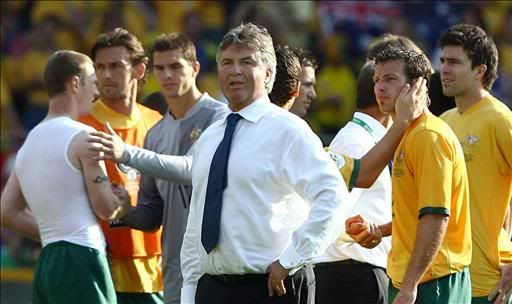
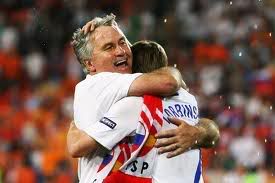
Ever since I witnessed Holland win their first ever international title in 1988, being a fan of the Oranje has been nothing but heartbreaks and bitter disappointments. With the Oranje not being part of the 24 teams playing this summer in France for the European Championship, let’s revisit their previous disappointments in this tournament since 1988. This chapter covers Euro 1996.
The Lead-Up:
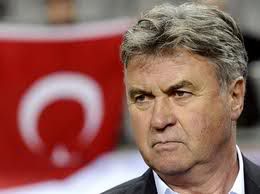
Two years after losing to Brazil in the Quarter-Finals of the 1994 World Cup, the Oranje were back in the UEFA European Championship. This was their second consecutive elimination in a World Cup by the eventual World Cup champions. Dick Advocaat remained for a year before Guus Hiddink replaced him as Oranje manager on New Year’s Day in 1995.
UEFA Euro 96 saw an increase in the number of qualified teams expand from eight teams to sixteen. This decision was reached by UEFA after the number of UEFA members rose from 33 to 48 following the break ups of the Soviet Union and Yugoslavia. This meant there would be eight groups of qualifiers with the group winners qualifying automatically along with the top 6th best group runner-ups. There would be a playoff between the other two remaining runner-ups.
Holland qualified through playoffs after finishing second in their group. They battled Czech Republic and Norway for a top two finish. Their other opponents in the group featured Belarus, Luxembourg and Malta, with Belarus pulling off an amazing 1-0 upset at home against the Oranje. Holland obtained second place, behind the Czech Republic, in their final group match. Holland were in third place trailing Norway by a point heading into the final group stage qualifier. The final group stage qualifier was against Norway. Anything short of a victory meant elimination but the Oranje rose to the occasion by defeating Norway 3-0 in front of their home fans at the De Kuip.
Holland and Ireland were the bottom two group runner-ups and would meet in a single match playoff to decide which country would take the final spot at Euro 96. Both sides faced off in England at Anfield stadium with the Oranje managing a 2-0 win courtesy of a brace by Patrick Kluivert. This victory meant that the Oranje were going to be playing in their third consecutive UEFA European Championship. This tournament would mark the final time Holland used Lotto as their kit maker, with an odd looking white and orange away shirt.
England were the hosts for the 1996 edition. Holland were grouped in Group A with the hosts England, Euro 92 group opponent Scotland, and Switzerland. Group B consisted of France, Spain, Romania and Bulgaria. Group C consisted of Germany, Czech Republic, Italy and Russia. Group D consisted of Denmark, the team that eliminated the Oranje in 1992 Euro Semi-Finals and became champions, Portugal, Croatia, and Turkey.
The 1988 champions era was over and a new generation of players were given the chance to shine. Dennis Bergkamp, Aron Winter (the lone holdover from Euro 88 team), Danny Blind and Ed de Goey were the familiar faces. This tournament would be remembered for the debut of many future stars of the Oranje, many of whom were members of Ajax Amsterdam side that reached consecutive UEFA Champions League Finals in 1995 and 1996. Ajax stars Edwin van der Sar, Michael Reiziger, Clarence Seedorf, Edgar Davids, Patrick Kluivert, Winston Bogarde, made their debut along with Phillip Cocu, and Johan de Kock, just to name a few. This squad also featured some familiar surnames such as Johan Cruyff’s son, Jordi Cruyff who was also making his Oranje tournament debut, Rob Witschge’s brother, Richard Witschge, and Frank de Boer’s twin brother, Ronald de Boer. Jaap Stam was called up but did not get to play while Frank de Boer and Marc Overmars, who shined for Holland at the 1994 World Cup, would miss this tournament because of injury.
Holland kicked off their Group A with a scoreless draw against Scotland before defeating Switzerland in their next match 2-0, with Cruyff scoring the opener and Bergkamp scoring the second. Holland ended the group stage with an embarrassing 4-1 defeat to England. A draw would have been sufficient for both teams to advance but the Oranje made it difficult on themselves after 22 minutes when Blind brought down Paul Ince inside the box and Shearer converted from the spot. Teddy Sheringham and Shearer scored two goals in less than ten minutes after the restart before Sheringham scored his brace after the hour mark. Down 4-0, Holland were on the brink of elimination with Scotland, temporarily in second place, enjoying a better goal difference. Fortunately, Kluivert came off the bench and scored the Oranje’s lone goal in the 78th minute which would be enough to send them through ahead of Scotland.
Holland’s opponents in the Quarter-Finals would be France. Defending champions Denmark exited in the group stage so a new champion was going to be crowned. Czech Republic would meet Portugal, Germany would meet Croatia, and England would face Spain.

The Heartbreak:
Holland v France pitted two teams breaking in new young players. Two years later, both sides would reach the 1998 World Cup Semi-Finals in France. However, the outcome of this clash would determine only one Semi-Finalist for Euro 96. This match took place four days after that lopsided loss to England and the team’s morale was low heading into this game because of that result and because of the Edgar Davids controversy prior to that loss.
After the Switzerland victory, Davids stated on a radio interview that “Hiddink should stop putting his head in some players’ asses.” Hiddink responded by kicking Davids off the team. Hiddink explained, many years later during an interview with Maarten Meijer for his Hiddink biography, “Guus Hiddink. Going Dutch,” why he made that decision.
“As a coach you have to be flexible, but that should not mean that you discard certain principles. Davids undermined team unity by expressing his complaints to the media. Relationships have to stay healthy. The team should know that I am consistent and cannot be manipulated. They found out. That clarity came as the result of a sad decision I had to make in England. A strong team is more than a collection of individual technical and tactical qualities”
There were reports that the black Dutch players of Surinamese origin, Kluivert, Davids, Seedorf, and a few others, were not getting along with the white players. There were also issues from the black players regarding tactics and the lack of consideration from the KNVB regarding meals and the lack of Surinamese dishes for them. Another major issue on the minds of those players was how much they were earning compared to their white teammates at club level. A photographer managed to take an unauthorized photo during the team meal, much to the annoyance of Hiddink, that showed the black and white players seated separately, even though Witschge was seated with the black players. It was a combination of a photo taken out of context and blown out of proportion coupled with poor PR management on Hiddink’s part.

Nonetheless, Oranje now had to face France in the Quarter-Finals. Two teams undergoing a youth revolution with their squads. The venue would be Anfield, the same stadium that Holland defeated Ireland to qualify for this tournament. Both sides kicked off the match by being cautious. Holland had the first scoring chance from a corner kick that Ronald de Boer headed wide. France’s best chances came from Christian Karembeu and Patrice Loko who missed the target with their efforts. Holland’s only other scoring chance of the half came courtesy of Cocu who blazed his shot over the bar after being set up by Bergkamp.
The second half would be a cagey affair and around the hour mark, Hiddink took off Bergkamp for Seedorf and a few minutes later, Cruyff was replaced by Winter. Hiddink’s final substitution came in the 80th minute when Youri Mulder came in for Witschge. This game would not be without controversy. Towards the end of regulation time, Holland were awarded a free kick from a Marcel Desailly hand ball. The problem was that it should have been a penalty but the referee somehow ruled that Desailly handled outside the box when replays clearly indicated otherwise.
During the ensuing free kick, Seedorf, Cocu and de Boer stood near the ball when de Boer quickly played it to Cocu who blasted a powerful shot on goal and away from the wall. Unfortunately, Laurent Blanc, who was not in the wall, rushed towards Cocu once he saw what was transpiring and managed to get in the way of Cocu’s shot. The ball took a slight deflection off of Blanc’s ankle and then struck the post before bouncing out. Lady luck denied Cocu and the Oranje twice in one shot. Holland had one last scoring chance at the end when Mulder set up Seedorf through on goal, but France’s keeper, Bernard Lama denied him with his foot.
Just like their last European elimination game in 1992, this match was heading into extra time. France were the better side in extra time with the best scoring chances. They first gave the Oranje a scare when a dangerous corner bounced inside the box, but fortunately it was out of reach from any of the nearby French players. Edwin van der Sar came to the Oranje’s rescue right before the end of the half after Bogarde dealt poorly with a Pedros cross, which allowed Zinedine Zidane to pounce on the ball and dribble past a few players before squaring it up to Youri Djorkaeff. Somehow, van der Sar was there to deny Djorkaeff with a great save.
Djorkaeff was the star of the extra time as he continued to give the Oranje trouble. In the second half of extra time, he controlled a cross from Pedros before blasting a powerful half volley which van der Sar saved. He and Zidane connected terrifically later on which resulted in Bogarde bringing down Djorkaeff near the edge of the box. Fortunately for the Oranje, Djorkaeff’s free kick just sailed over the bar. Just like that 1992 match against Denmark, penalties would decide the outcome of this match.
Holland went first and de Kock saw his effort come off the cross bar and bounce in. Ronald de Boer and Kluivert also converted on their chances. However, Zidane, Djorkaeff, and Lizaranzu also scored from the spot with van der Saar guessing correctly on Zidane’s and Lizarazu’s efforts but could not stop the well taken penalties. Seedorf stepped up to take the fourth penalty and right before he was to take it, he was instructed by the referee to place the ball properly on the spot. Seedorf complied with the referee’s orders and then took his penalty, which was a weak effort in the middle, which Lama was able to dive to his left to make the save. Seedorf lashed out in frustration on the ball that bounced back to him and he struck it into the goal. Did the referee mess up his routine?
Guérin converted from the spot for France and Blind converted on his shot. Blanc stepped up to take the decisive penalty and sent van der Sar the wrong way as he coolly slotted the ball in. France celebrated while for the second consecutive UEFA European Championship, Holland were heading home after a bitter elimination via penalty shootout. Overall, this was a learning experience for the manager and a team full of many young players who would get another chance at success in France.

The Aftermath:
The Germans eliminated Croatia and then hosts England to reach the Final where they defeated Czech Republic in extra time thanks to a Golden Goal from Oliver Bierhoff. Thus, Germany made amends after losing the 1992 Final against Denmark. The Oranje only managed to score three goals in this competition, which was lower than what they scored in their previous two Euros. Two years later, Hiddink and most of these players, including Edgar Davids, would impress the world as they reached the Semi-Finals of the 1998 World Cup in France. There, they would suffer a bitter elimination by the hands of Brazil yet again. Their elimination would also come at the hands of a penalty shootout.
Danny Blind retired from the national team following this tournament while the unforgettably named de Kock would not feature for the Oranje again. Yet, this core of players would continue to represent the Oranje in the future with Kluivert and Bergkamp forming a superb attacking duo for the next four years. Furthermore, van der Sar, Cocu, Davids, the de Boer twins and others would represent the Oranje for many years to come. This truly was the ushering of a new Oranje generation.